Published 2026-09-24T22:23:00.790Z from WPTV via WFLX.
A yearlong moratorium gives the county time to develop rules for noise, utilities and neighborhood compatibility. But it does not erase development rights already approved.
Introduction
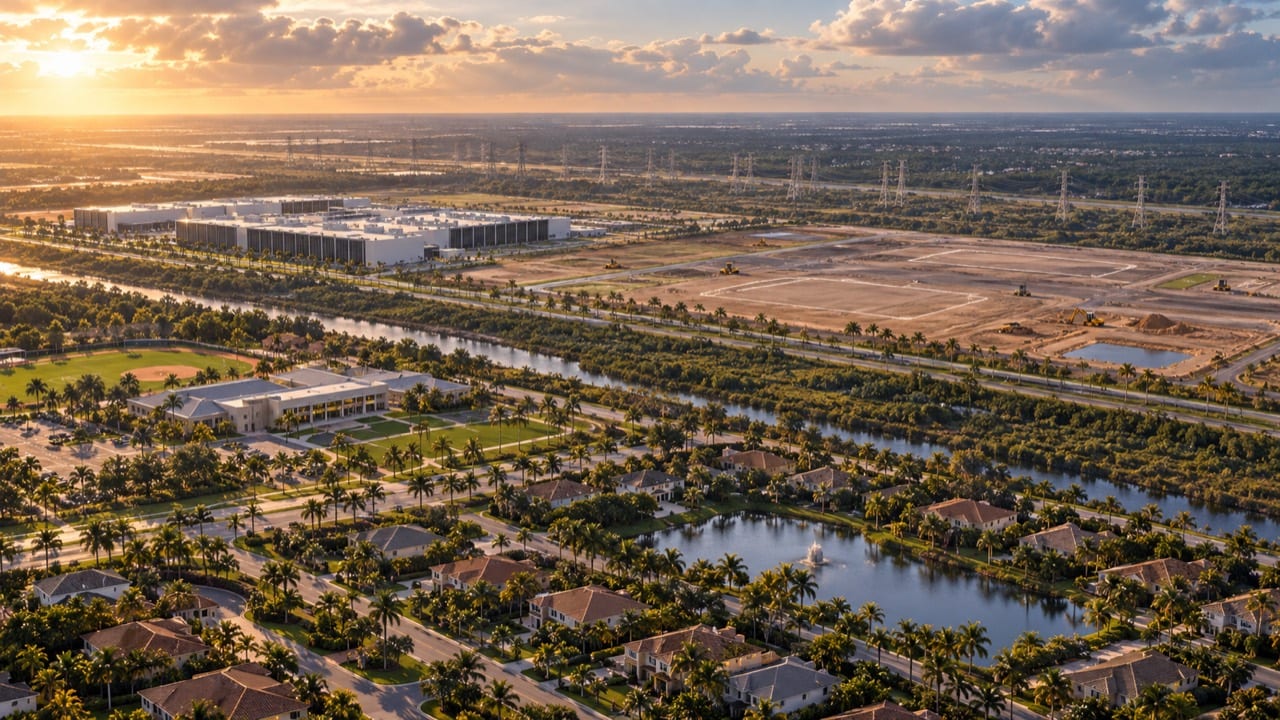
Palm Beach County commissioners unanimously approved a moratorium on September 24, 2026, temporarily blocking certain new large data-center applications in the unincorporated county. The measure follows the county’s July rejection of Project Tango’s requested expansion near the Arden community—but existing approvals on the property remain an important part of the story. The lead image is illustrative; it does not show Central Park Commerce Center or indicate that the site is closed.
What the county’s pause actually covers
The moratorium applies to new zoning requests and related comprehensive-plan amendments for data centers with anticipated peak electrical demand of 50 megawatts or more in unincorporated Palm Beach County. During the pause, the county will not accept, process or approve qualifying applications. It may end earlier if permanent regulations are adopted. The threshold is based on power demand, rather than building size. WLRN reported during the August first reading that county staff would evaluate electrical demand across an entire property, so an operator could not avoid the threshold by dividing a large operation into smaller parcels. This is a targeted land-use measure. It is not a general construction moratorium and does not suspend West Palm Beach’s residential condominium pipeline. Its stated scope is qualifying data-center applications in unincorporated county areas. The process began before Tango’s rejection. Commissioners directed staff to pursue a moratorium in July, with the measure moving through subsequent hearings before September’s final adoption.
Why Project Tango became the flashpoint
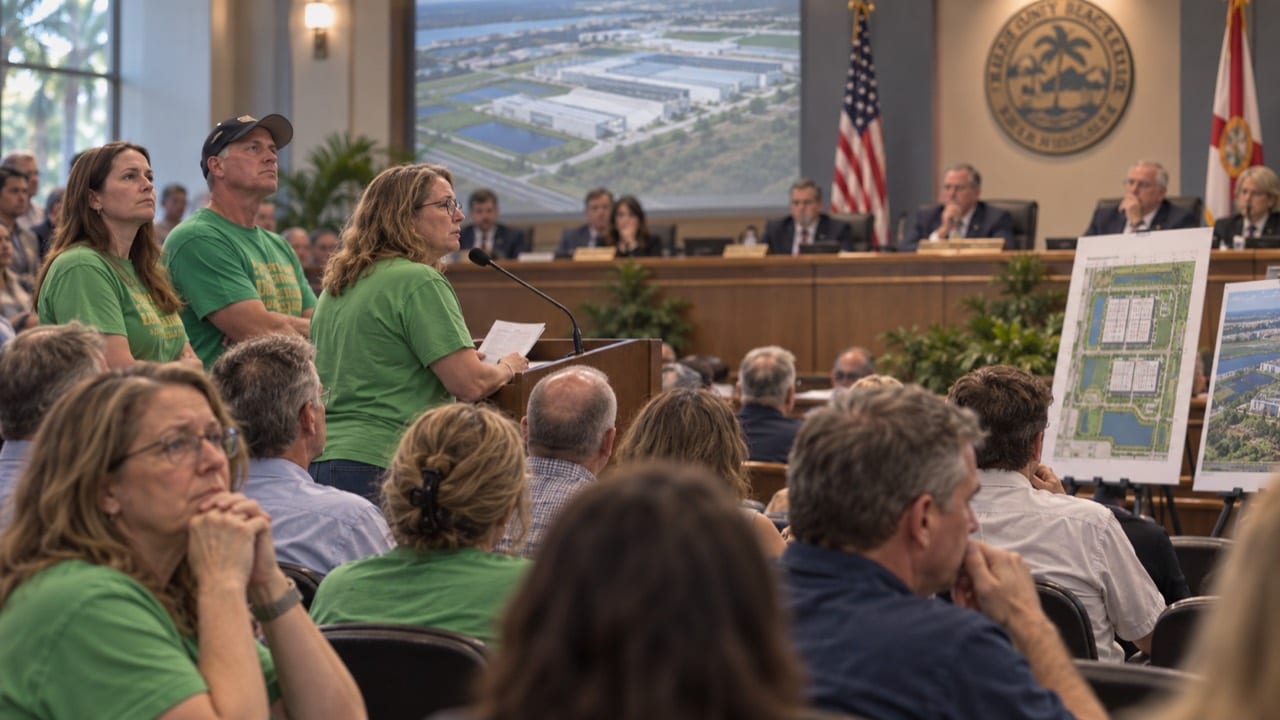
Project Tango is associated with Central Park Commerce Center, an approximately 202.7-acre property along Southern Boulevard next to Florida Power & Light’s West County Energy Center. The project sponsor says the site has industrial and employment-use approvals dating to 2016 and points to its existing electrical infrastructure. The proposed expansion put a broader question before commissioners: whether a hyperscale computing operation belonged near established homes and a school. WLRN reported that Tango requested 600 megawatts of power, illustrating the scale of the proposal relative to the county’s 50-megawatt threshold. On July 15, commissioners rejected the proposal by a 5–1 vote after a public hearing that lasted more than 12 hours. Residents and teachers raised concerns about noise, vibration, water use and the project’s proximity to Arden and Saddle View Elementary School. Commissioners concluded that the applicant had not adequately addressed concerns about nearby impacts.
The project sponsor’s case—and the questions that remain
The development team argues that the property’s industrial history and proximity to electrical infrastructure make it suitable for a data center. Its published materials describe enclosed equipment, setbacks and landscaped buffers intended to reduce off-site sound. Water use has also been contested. The project sponsor says the proposed design would use closed-loop cooling, recirculating water rather than continuously replacing it. It projects about 5,000 gallons of daily potable-water demand at full buildout, primarily for ordinary employee uses after the cooling system’s initial fill. Those are the project sponsor’s projections, not measurements from an operating facility. The central planning question is how those claims would be evaluated and enforced. The county has not yet adopted permanent rules governing the location and operation of large data centers. Noise, water and utility demands, and compatibility with nearby homes and schools remain part of that policy debate.
What can still happen at the site
An existing county-approved site plan includes two 100,000-square-foot data-center buildings, a 1.2-million-square-foot warehouse and a 6,000-square-foot office, for a combined 1.406 million square feet. Separately, county records describe a broader master plan of about 2.02 million square feet across multiple uses. That figure should not be mistaken for 2 million square feet of data centers. The July denial was without prejudice, leaving the project sponsor able to revise and reapply through the applicable approval process. A revised application would still be subject to the rules in effect when it is filed, including the temporary moratorium where applicable. The practical takeaway is straightforward: the county stopped the requested expansion, but it did not return the property to land without development rights.
What buyers should watch next
The next significant decision is what replaces the temporary pause. Officials have discussed possible restrictions addressing location, proximity to homes and schools, noise, water use and other operating impacts. Those discussions are not a finished set of permanent regulations. On September 24, commissioners chose to have staff return with a consultant contract to help develop rules. The scope and recommendations of that work will shape what standards apply to future proposals. For buyers, Tango offers a practical due-diligence lesson: examine both what is proposed nearby and what has already been approved. Check the permitted uses on neighboring parcels, which approvals remain active, which buffers and operating conditions are enforceable, and which assurances appear only in a presentation rather than an approval document. The moratorium creates time to write new rules. It does not make the surrounding land-use questions disappear.
Why it matters
For nearby homebuyers, a rejected expansion does not necessarily erase existing development approvals. Check the approved site plan, permitted uses and enforceable operating conditions alongside any proposed changes.
Buyer context
For nearby homebuyers, a rejected expansion does not necessarily erase existing development approvals. Check the approved site plan, permitted uses and enforceable operating conditions alongside any proposed changes.
Continue the research
Explore the development corridors · Compare buildings · Ask the buyer research desk