Bottom line
The City’s October 30 advisory makes drainage and everyday access timely questions for West Palm Beach condo buyers. Start with the garage, the surrounding streets and the association’s records—not assumptions based on the view.
How to use this guidance
Use the guidance to frame questions before comparing West Palm Beach buildings. Then check project pages, current floor-plan packets, source-linked updates, and The Scott Gordon Group at Douglas Elliman for the details that can change.
What the City’s advisory says—and what it does not
In its October 30, 2026 advisory, the City of West Palm Beach warned of a potentially wetter-than-usual period from November 2026 through March 2027. It said prolonged or heavy rain, particularly alongside high tides, could contribute to localized flooding and slower drainage. The City also asked commercial property owners and HOA managers to inspect and clear private drainage systems and swales.
That is a preparedness message, not a finding that a particular condominium has flooded or is deficient. For a buyer, the useful response is to make access and drainage part of the property-specific conversation.
Keep the forecast dates in perspective
The South Florida Water Management District’s August 4 seasonal forecast lists remaining East Coast high-tide windows of October 22–November 12, November 22–29 and December 22–27, 2026. Predicted peaks vary by location, and actual conditions can differ from the seasonal forecast.
Those windows are not a calendar of confirmed flooding. Consult the District’s current tidal outlooks and local advisories when planning visits; do not use a regional forecast to assign a flood-risk rating to a building.
Start at the garage—not the balcony
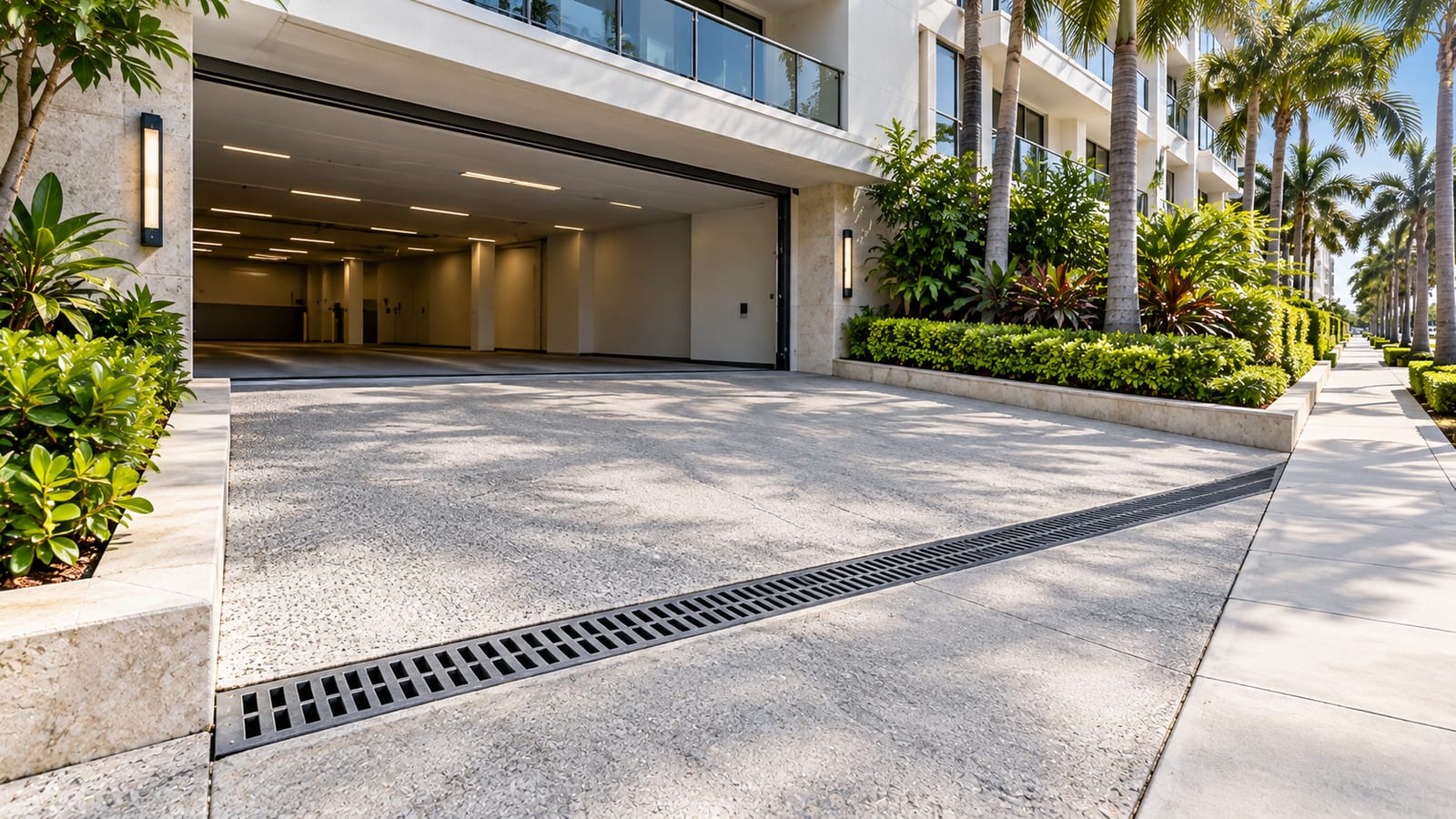
A high-floor residence and its everyday access are different parts of the purchase. On a tour, ask the developer or association to explain where vehicles enter, how rainwater is handled around the entrance and who maintains the relevant equipment.
Useful questions include: Are there documented drainage inspections and maintenance records? If the building uses pumps or barriers, who operates and tests them? What is the procedure if a garage entrance must close? Ask for supporting records rather than treating a visible grate, raised threshold or marketing description as an engineering assessment.
Trace the trip home
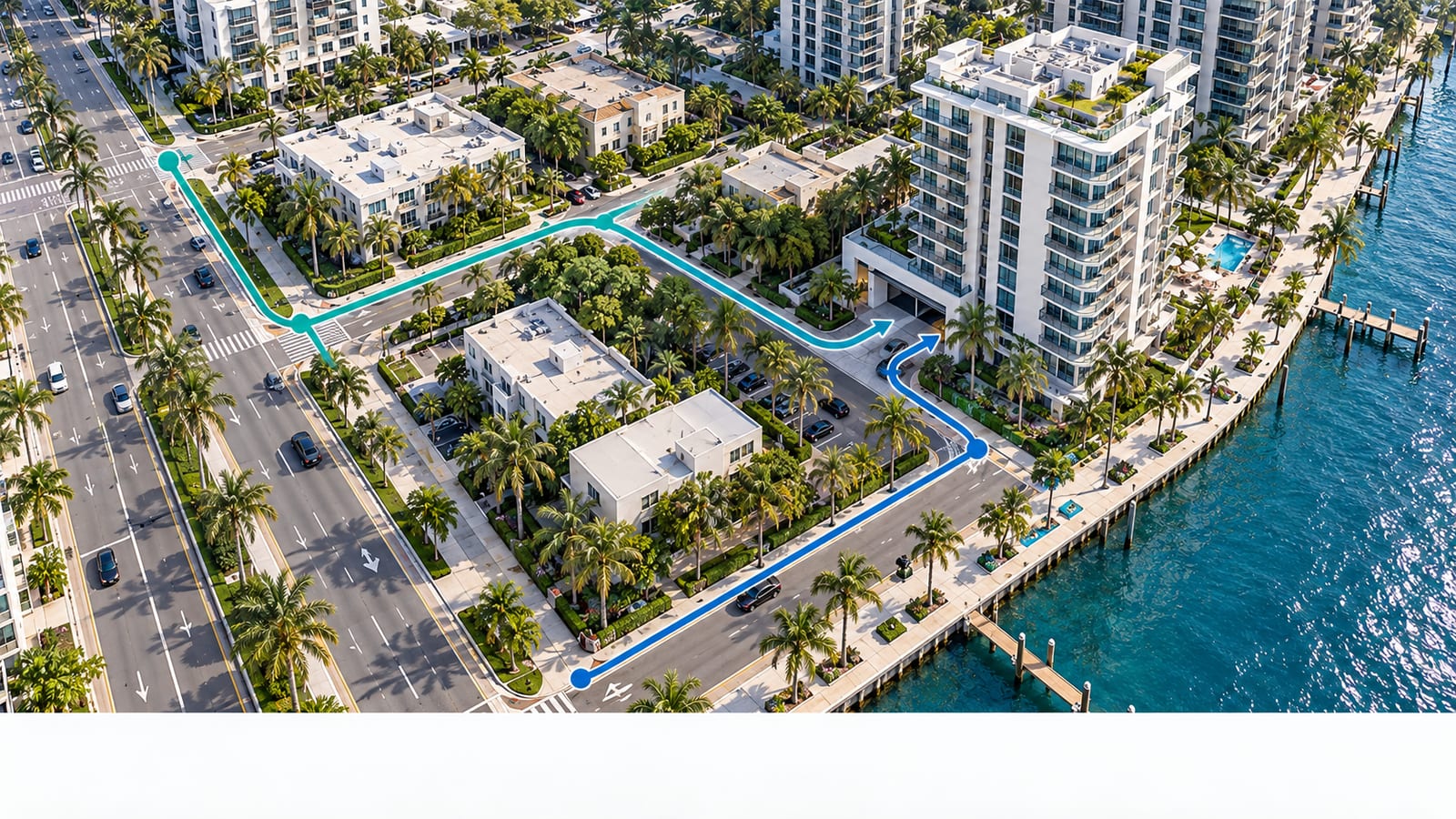
Look beyond the property line. Ask which streets residents normally use, whether the association has documented prior access disruptions, and how residents are notified when conditions change. A pedestrian entrance, service entrance and garage ramp may raise different questions.
For a building still under construction, separate planned features from completed, inspected systems. Ask what access arrangements will be available at occupancy and which nearby public improvements remain outside the developer’s control. A proposed improvement is not an assurance that it will be finished when a residence closes.
Ask who owns the maintenance responsibility
The City’s request to inspect private drainage makes responsibility a useful topic for association due diligence. Ask where public maintenance ends and private responsibility begins. Who checks drains and swales, how often, and where are service records kept?
Request the relevant maintenance plan, recent reports and any documented follow-up work. If a report identifies a concern, ask what was recommended, whether work was completed and what evidence supports that answer. A scheduled repair and a completed repair should not be described interchangeably.
Build a property-specific document file
Before relying on broad assurances, ask your transaction team which property records are available and relevant: seller or developer disclosures, association minutes and maintenance records, applicable flood-zone information, elevation documentation where available, and any engineering reports addressing the questions raised.
Bring insurance questions to a qualified insurance professional using the actual unit, building and policy documents. This guide does not determine a property’s flood zone, insurance coverage, premium or likely loss. Regional forecasts and illustrative images cannot answer those questions.
The buyer takeaway
Use the advisory to improve the questions you ask, not to label an entire waterfront corridor. The goal is a clear, documented account of how a particular property handles drainage, access and maintenance—and which answers still need verification.
Sources checked November 2, 2026. The City advisory was published October 30; SFWMD’s seasonal forecast was published August 4. Forecast periods are not completed events. All three images are illustrative and are not evidence of conditions at a named building.