Bottom line
A West Palm Beach buyer checklist for reviewing deposits, disclosures, timelines, budgets, financing, and contract flexibility before signing a pre-construction condominium agreement.
How to use this guidance
Use the guidance to frame questions before comparing West Palm Beach buildings. Then check project pages, current floor-plan packets, source-linked updates, and The Scott Gordon Group at Douglas Elliman for the details that can change.
Start by separating a reservation from a purchase contract
Pre-construction sales often begin with a reservation agreement that holds a unit or unit line for a limited period. That is different from signing the purchase agreement. The purchase contract locks in the unit, deposit schedule, and many of the rights and obligations that will govern the transaction. In Florida developer sales, buyers generally receive a 15-day voidability window after contract execution and receipt of the required disclosure documents, so the timing and completeness of the document package matter.
Map the deposit schedule before liquidity is committed
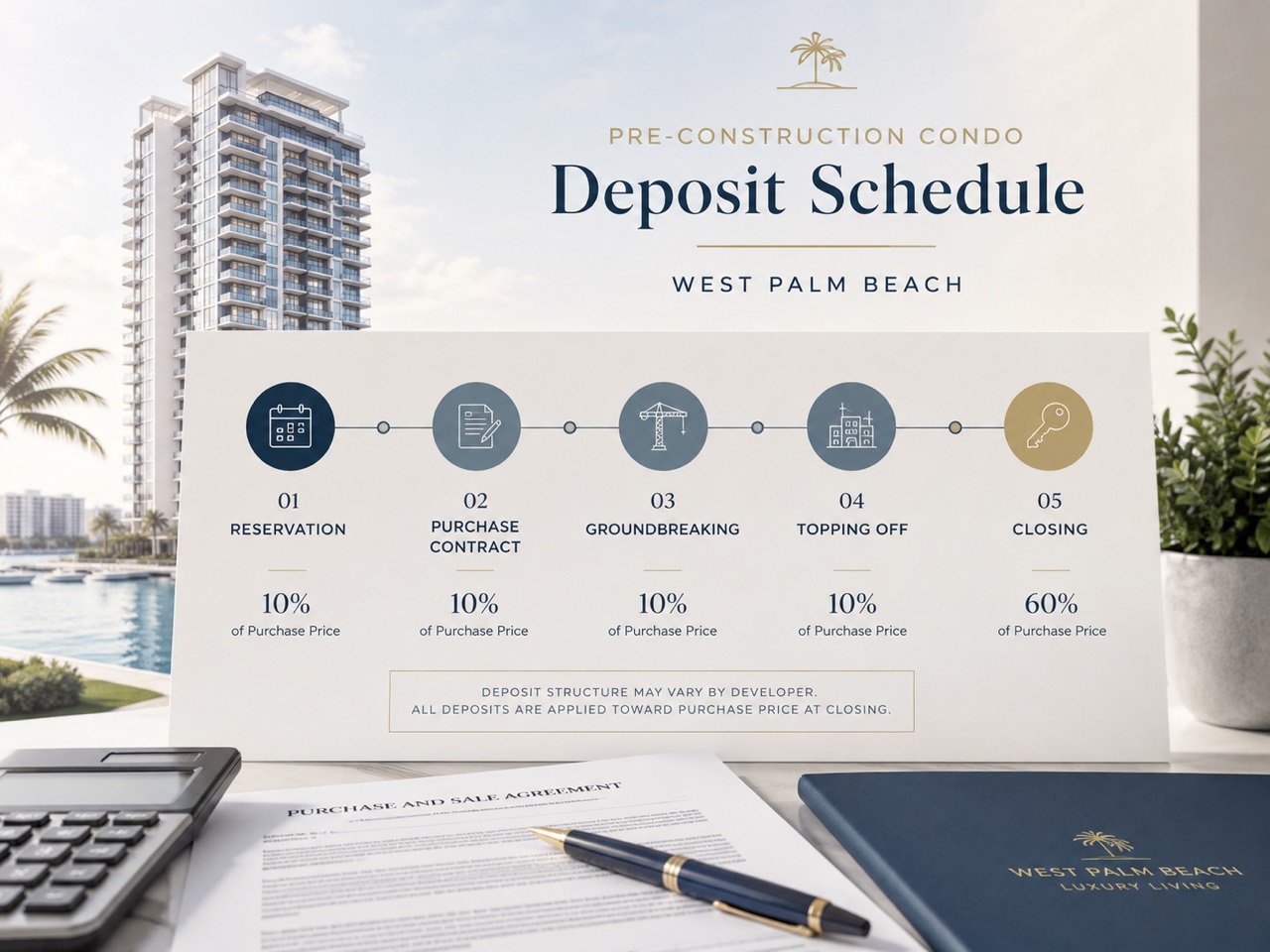
Many West Palm Beach pre-construction projects use staged deposits tied to milestones such as reservation, contract, groundbreaking, topping off, and closing. Florida law requires the first 10 percent of the purchase price to be handled through escrow protections, while additional deposits may be treated differently if the contract and statutory conditions allow it. Buyers should confirm who holds escrow, when funds become non-refundable, whether interest is credited, and under what conditions deposits can be released to the developer.
The prospectus is where the binding details live
The full disclosure package should be reviewed before the rescission period expires. It can include the declaration, bylaws, articles, rules, budget, floor plans, plot plans, management agreements, lease or ground-lease material if applicable, and reserve or structural-study information. Remote buyers should not rely only on a presentation-room summary because the documents are where rental rules, pet policies, common-area ownership, amendment thresholds, and operating assumptions usually appear.
Assignment rights deserve a separate conversation
Assignment provisions can vary widely. Some contracts prohibit assignment, some require developer consent and a fee, and others allow transfers to trusts, family entities, or affiliates under limited conditions. Buyers using estate-planning entities or expecting exit flexibility before closing should ask whether assignment is allowed, when consent is required, whether the developer has discretion to deny it, and whether the original buyer remains liable after assignment.
Rental rules can change the value of the unit
Rental, occupancy, guest, and pet restrictions should be reviewed early. Minimum lease terms, approval requirements, subleasing limits, blackout periods, and municipal short-term-rental rules can affect both investors and personal-use buyers. A building can have strong amenities and still be a poor fit if the declaration does not support the owner's intended use.
Construction timing creates contract and financing risk
Pre-construction delivery can move because of permitting, labor, materials, financing, weather, and phasing. Buyers should identify the outside date or long-stop date, any delay remedies, the design-selection timeline, upgrade allowances, inspection process, and warranty path. Financing adds another layer because permanent loans are usually evaluated closer to substantial completion, and lender project eligibility can depend on reserves, insurance, completion status, and buyer mix.
Budget for the closing table and the post-turnover building
New-construction closings may include developer fees, title charges, filing charges, documentary stamps, prepaid assessments, and prorated taxes. After closing, monthly assessments can change as the building moves from developer control to owner control. Buyers should review reserve assumptions, insurance exposure, amenity operating costs, ownership of shared facilities, and whether later phases could affect existing owners.
Review the sponsor team and the turnover process
Developer, contractor, architect, operator, and financing history all affect risk. Buyers should research prior Florida projects, review litigation or delivery history where available, and ask what documents owners receive at turnover. The turnover package can include governing documents, financial records, service contracts, plans, warranties, inspection materials, and structural reserve study information.
Buyer checklist before signing
Use this list to organize the first diligence pass before deposit exposure grows.
What to review with counsel
A Florida real estate attorney should review the purchase agreement, riders, condominium declaration, bylaws, escrow agreement, prospectus, budget, reserve information, financing contingency, warranty language, dispute-resolution provisions, closing-cost estimate, and any verbal promise that needs to appear in writing. This article is buyer guidance, not legal advice, and the final answer should come from the signed documents and professional review.