Bottom line
Branded residences can deliver real service value, but the name alone is not enough. Buyers should understand the operating model, fees, brand agreement, and resale logic before paying the premium.
How to use this guidance
Use the guidance to frame questions before comparing West Palm Beach buildings. Then check project pages, current floor-plan packets, source-linked updates, and The Scott Gordon Group at Douglas Elliman for the details that can change.
A sector moving into the mainstream
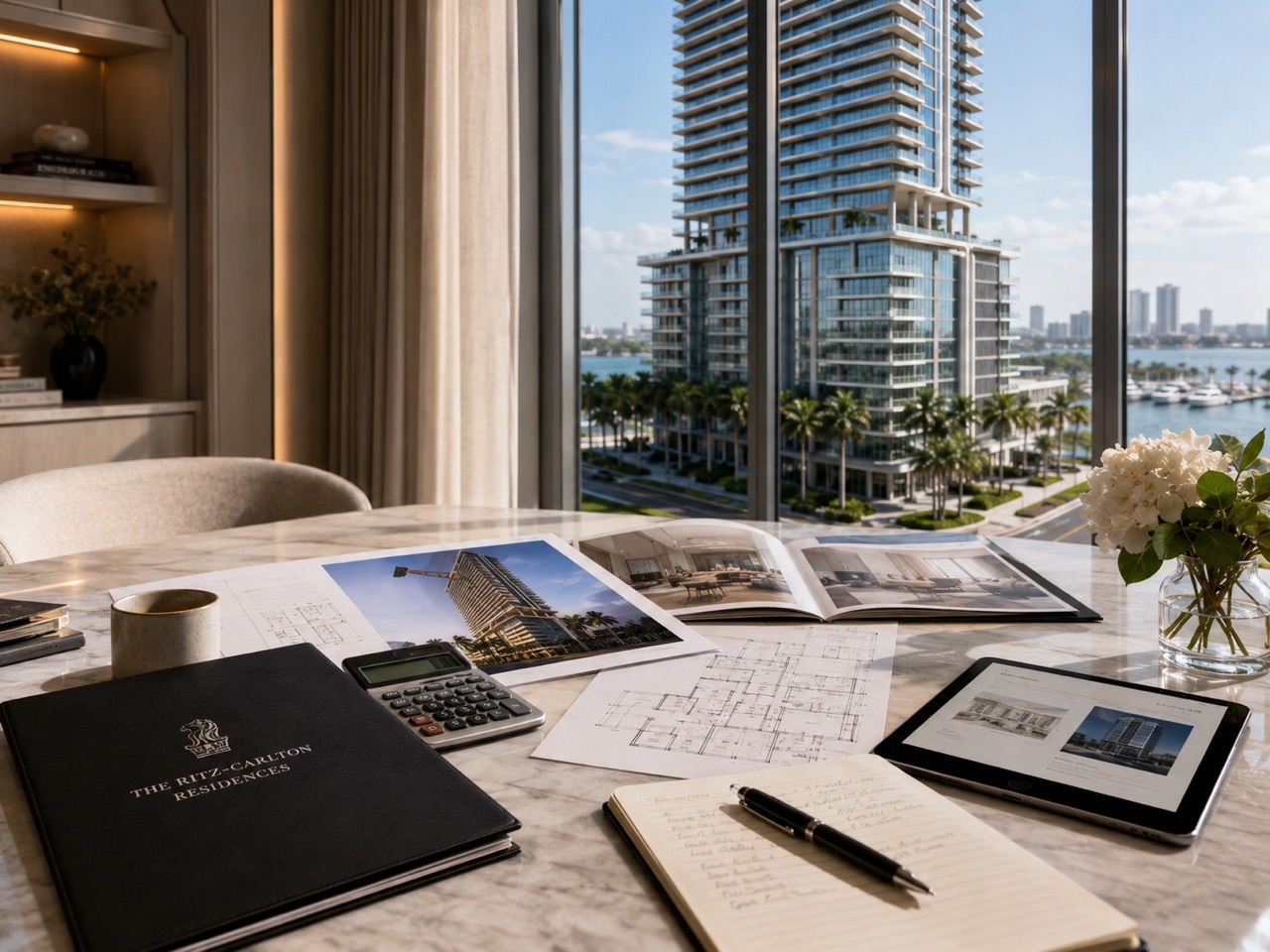
Branded residences are privately owned condominiums marketed under a hotel, hospitality, designer, or other luxury name. What began as a niche category has grown into a global real-estate segment, with South Florida as one of its most active markets. That matters in West Palm Beach because buyers are no longer choosing between a branded building and a generic alternative. They are comparing different forms of branding, different service promises, and strong independent luxury buildings that may offer a similar daily experience without the same premium.
What the premium is supposed to buy
The core promise is a more consistent, service-led ownership experience. Depending on the building, that can include concierge and front-of-house staffing, valet, security, package handling, housekeeping, maintenance, dining, spa services, fitness programming, owner privileges, digital service platforms, and curated design standards. The useful question is not whether the amenity list sounds impressive. It is which services are included in monthly costs, which are a la carte, and how often the buyer will use them.
West Palm Beach now offers several branded interpretations
The local comparison is becoming more nuanced. Ritz-Carlton Residences brings a hospitality-service frame and owner benefits. Mr. C Residences leans into Cipriani-linked service, dining, and a members-club atmosphere. Mandarin Oriental Residences presents a standalone branded-residence model with resort-style amenities and a strong wellness component. Banyan Tree Residences emphasizes sanctuary, privacy, and restorative living. These projects should not be treated as interchangeable simply because each carries a recognizable name.
Brand management, brand licensing, and brand-like luxury are different
A buyer should identify the operating structure before comparing premiums. A hotel-managed residence may apply a hospitality operator's staffing and service culture directly to the building. A licensed brand association may provide standards, design guidance, and oversight while day-to-day operations sit elsewhere. Independent luxury buildings can still offer concierge service, thoughtful amenities, and polished ownership without paying for a global badge. Forte on Flagler and Alba Palm Beach are useful non-branded comparisons when a buyer wants to separate service value from name recognition.
Pricing premiums are a starting point, not a conclusion
Industry research commonly reports a premium for branded residences over comparable non-branded homes, with urban benchmarks often discussed around the 30 percent range. That does not mean every branded condominium deserves the same uplift. The premium should be tested against location, floor plan, terrace usability, view protection, construction quality, reserves, governance, carrying costs, and the depth of future supply. A recognizable brand can support marketing and resale visibility, but it cannot repair a weak residence line or an ownership structure that does not fit the buyer.
HOA fees and service charges deserve close attention
Branded residences often carry higher monthly costs because hotel-style staffing, security, valet, maintenance, and programming must be funded. Buyers should request a complete operating-cost breakdown and separate included services from optional services. Full-time residents may place a high value on daily convenience. Part-time owners may appreciate lock-and-leave ease but should still ask whether they are paying for amenities they will seldom use.
The brand agreement is part of the diligence
Brand participation is contractual. Management and licensing agreements can expire, change, or fail to renew. Buyers should ask how long the agreement lasts, who controls renewal, what standards the operator must maintain, and what happens to naming rights if the relationship ends. Resale value should be underwritten using the real estate fundamentals as well as the brand halo.
Who may benefit most
Branded residences can make sense for globally mobile buyers, time-poor professionals, families seeking service integration, part-time owners who value security and maintenance, and buyers drawn to a particular lifestyle philosophy such as wellness or hospitality. Buyers who prefer extensive customization, already have household staff, or do not value brand-driven experiences may find equal or better value in an independent building.
A practical branded-residence checklist
Before paying a premium, compare the brand promise with the documents, budget, and operating structure.
When the premium makes sense - and when to be careful
The premium is easier to justify when the service quality is genuinely useful, the brand has residential operating experience, the site and floor plans are strong independently of the name, and the ongoing costs match the buyer's lifestyle. Be more careful when brand involvement is shallow, service charges are disproportionate, the management agreement is fragile, construction is still early, or nearby supply makes the resale story less distinctive.